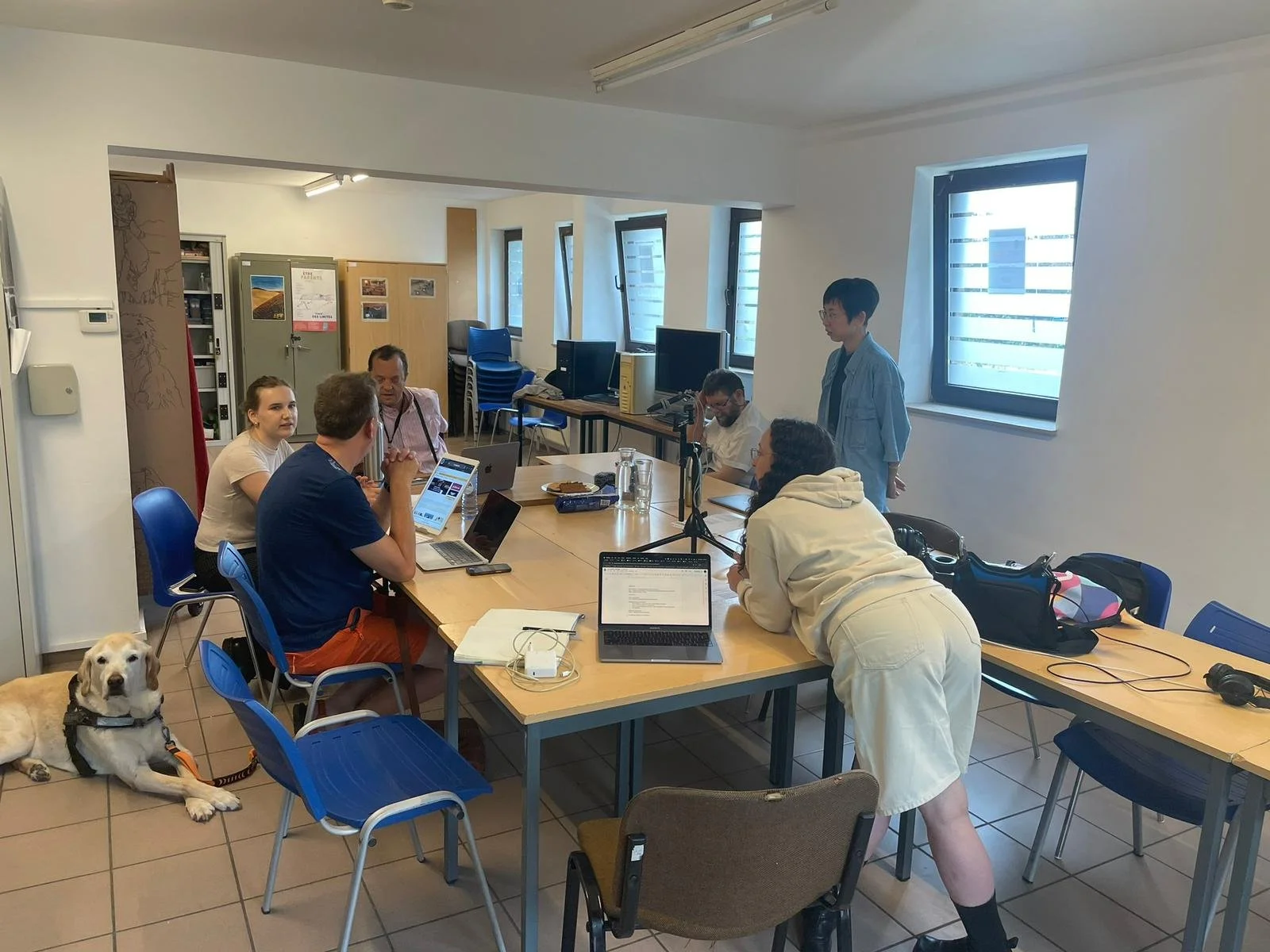
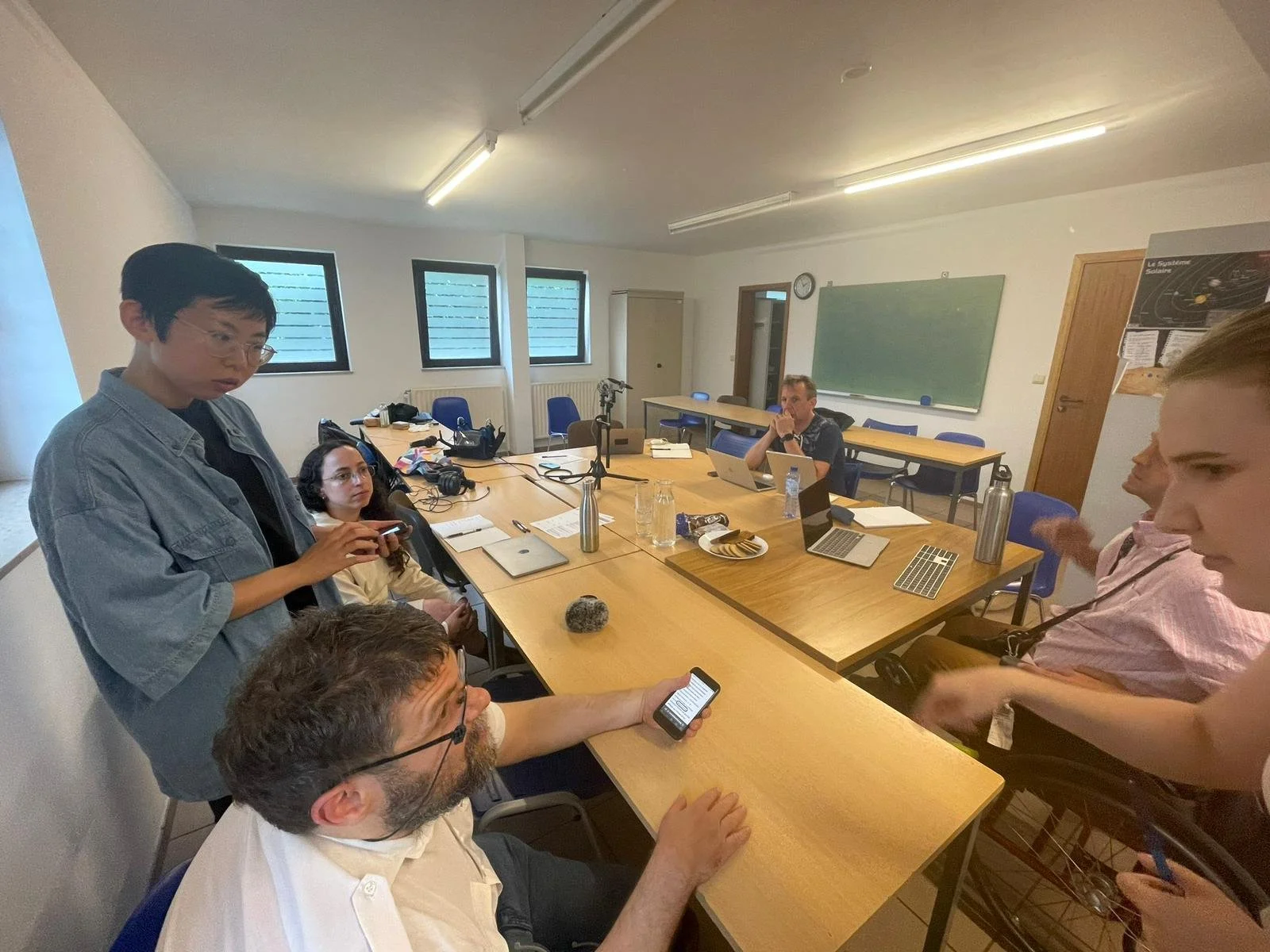
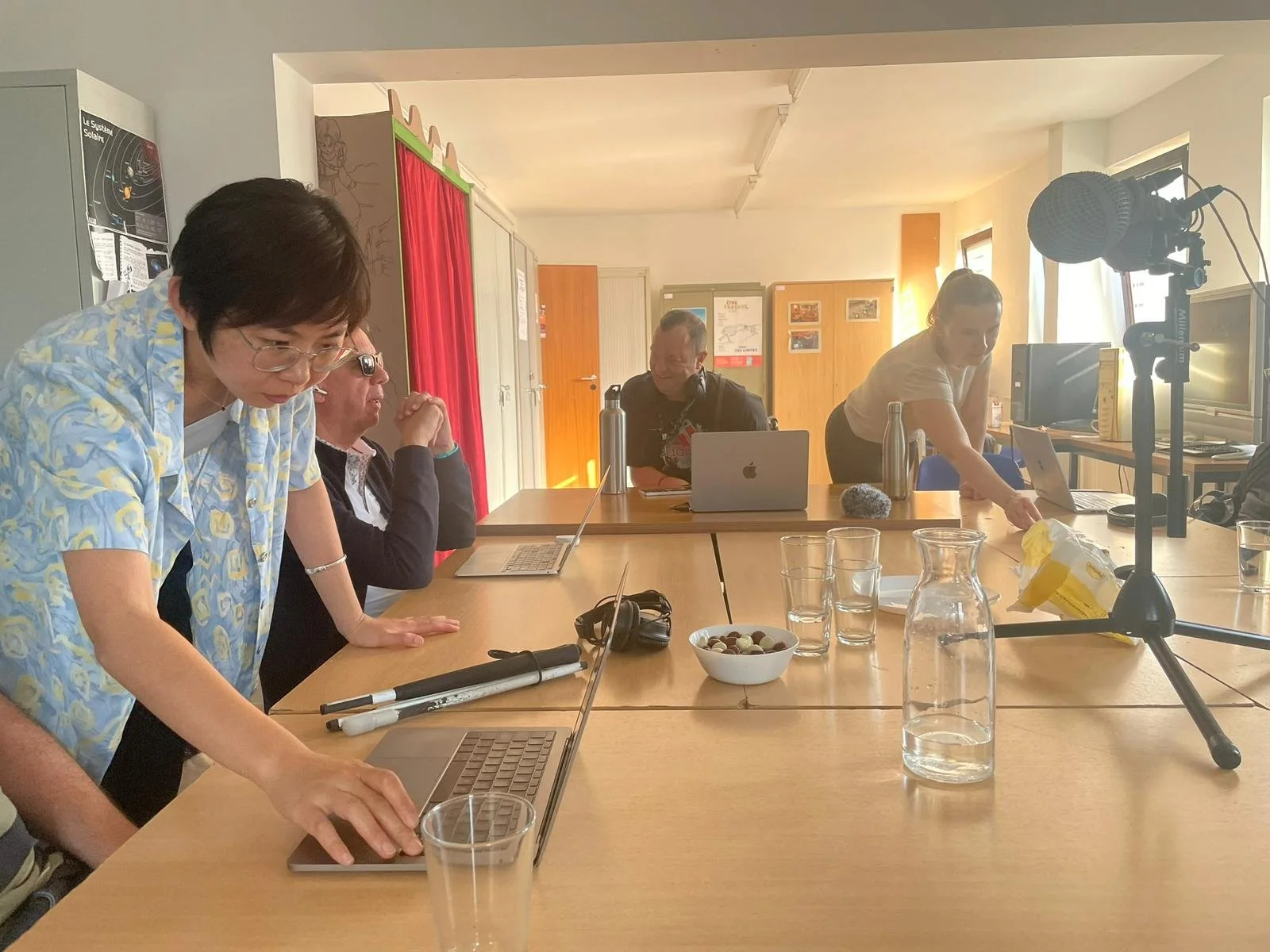
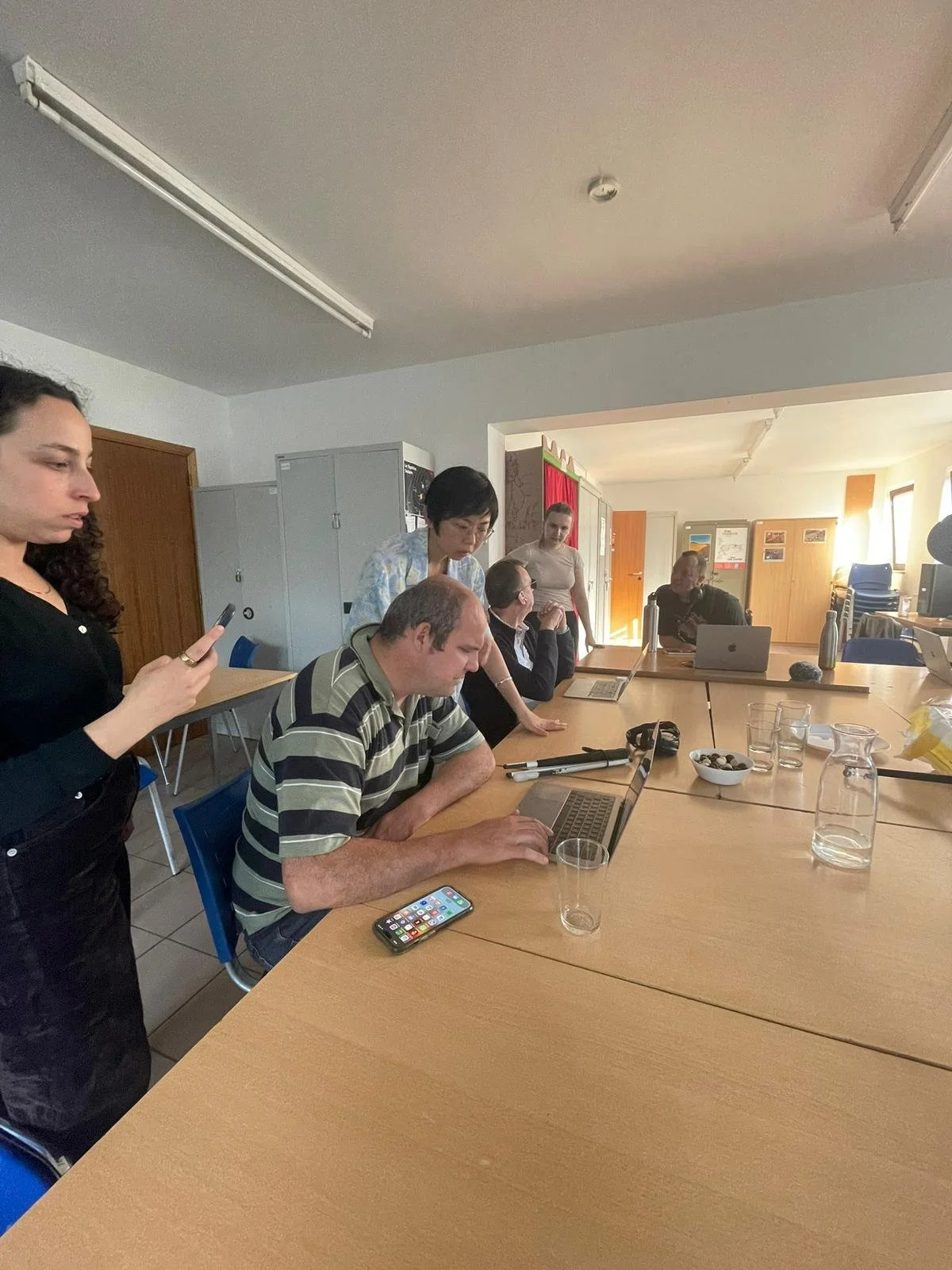
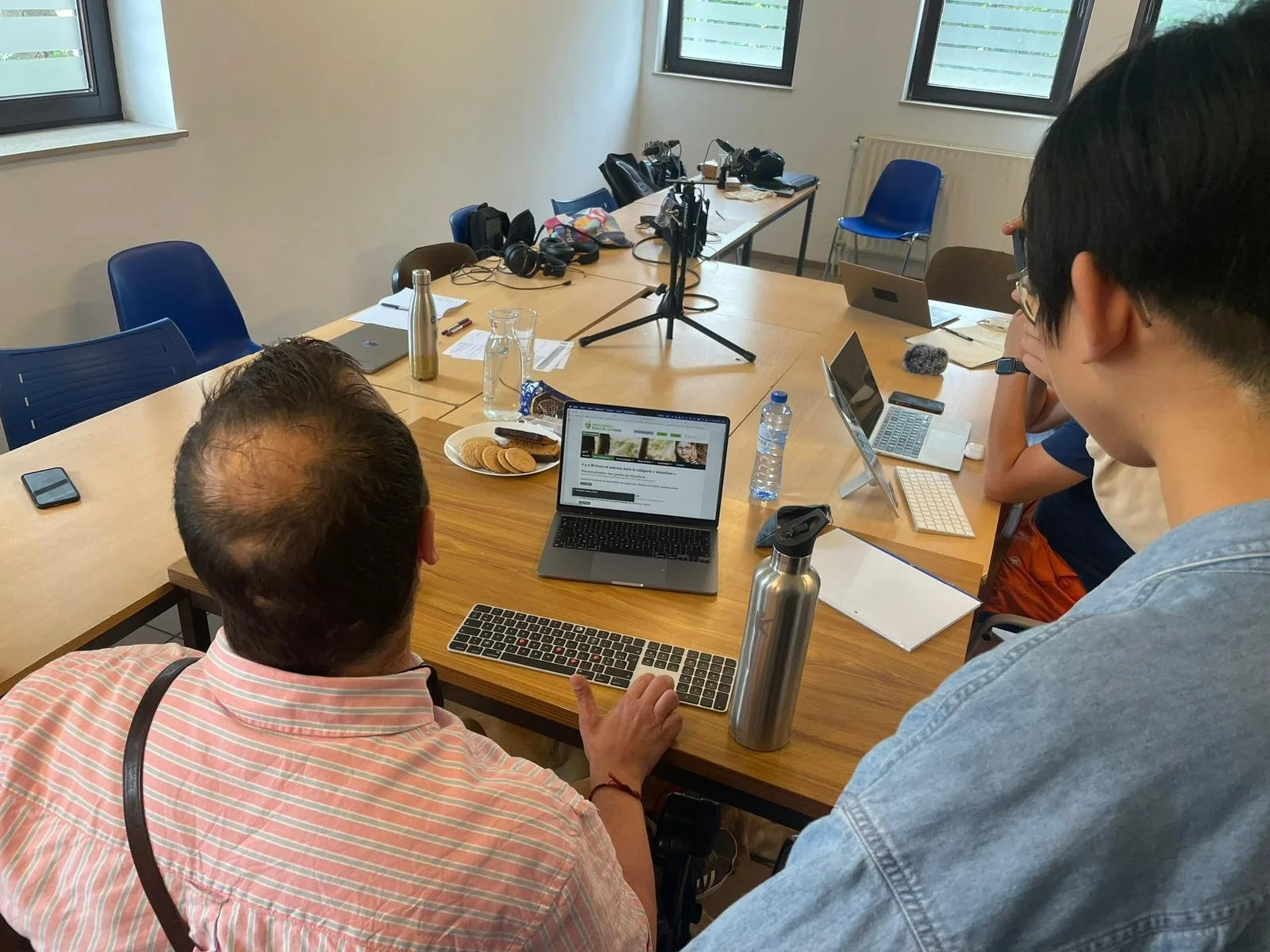
A group of six people in a well-lit meeting room, gathered around a large rectangular table. Laptops, microphones, and other devices are scattered on the table, suggesting a collaborative work session. A guide dog is resting on the floor next to one participant.
Phase 1 Co-creation
The team prepared for their initial co-creation meeting by assembling "the first prototype of a spatialized audio translation of a website." Alyssa Gersony coordinated outreach to artists and disability organizations. Through partnerships including Constant vzw in Brussels, Staging Access, the European Disability Forum, and Eqla, "an incredible network of arts workers began taking shape around the project's mission."
Three screen reader users—Bruno, Chris, and Raphael—participated in the first session held August 9th in Louvain-la-Neuve, Belgium.
Session Activities
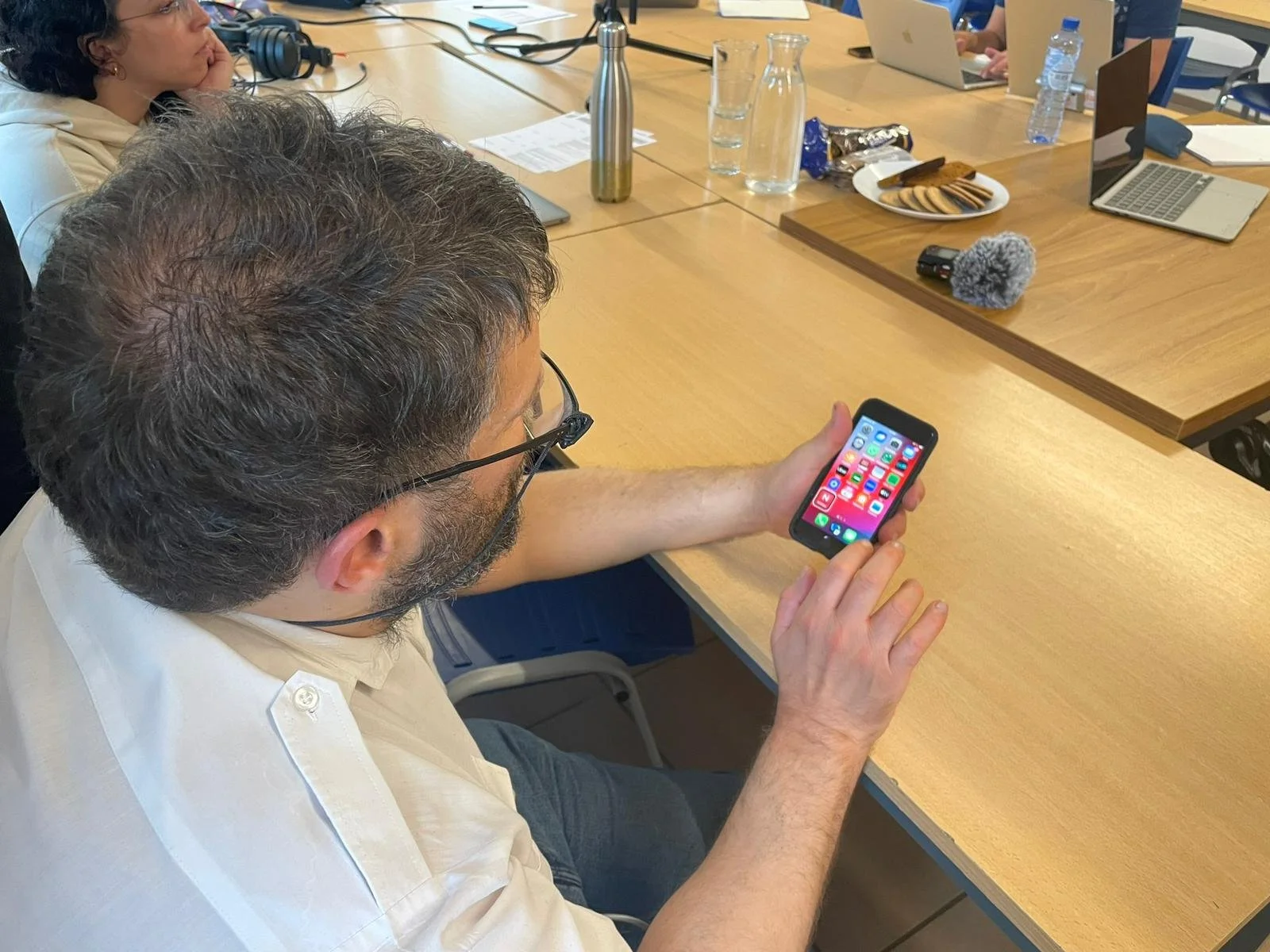
Designers Dan and Colette facilitated experiences including "a choreography of listening, demo-ing, critiquing and learning more about the nuances of screen reader usability." Activities included a deep listening practice called "making wind" and demonstrations of different device setups and screen reader configurations.
Key Insights
The co-creators revealed that "spatial or visual information online" presents challenges for screen readers. Chris highlighted the need for "understanding the layouts of maps, and the textures of images." Bruno and Raphael noted feeling lost without boundary announcements or page-end notifications, advocating for "more description, more auditory cues that were explained to the user."
Second Session (September 20th)
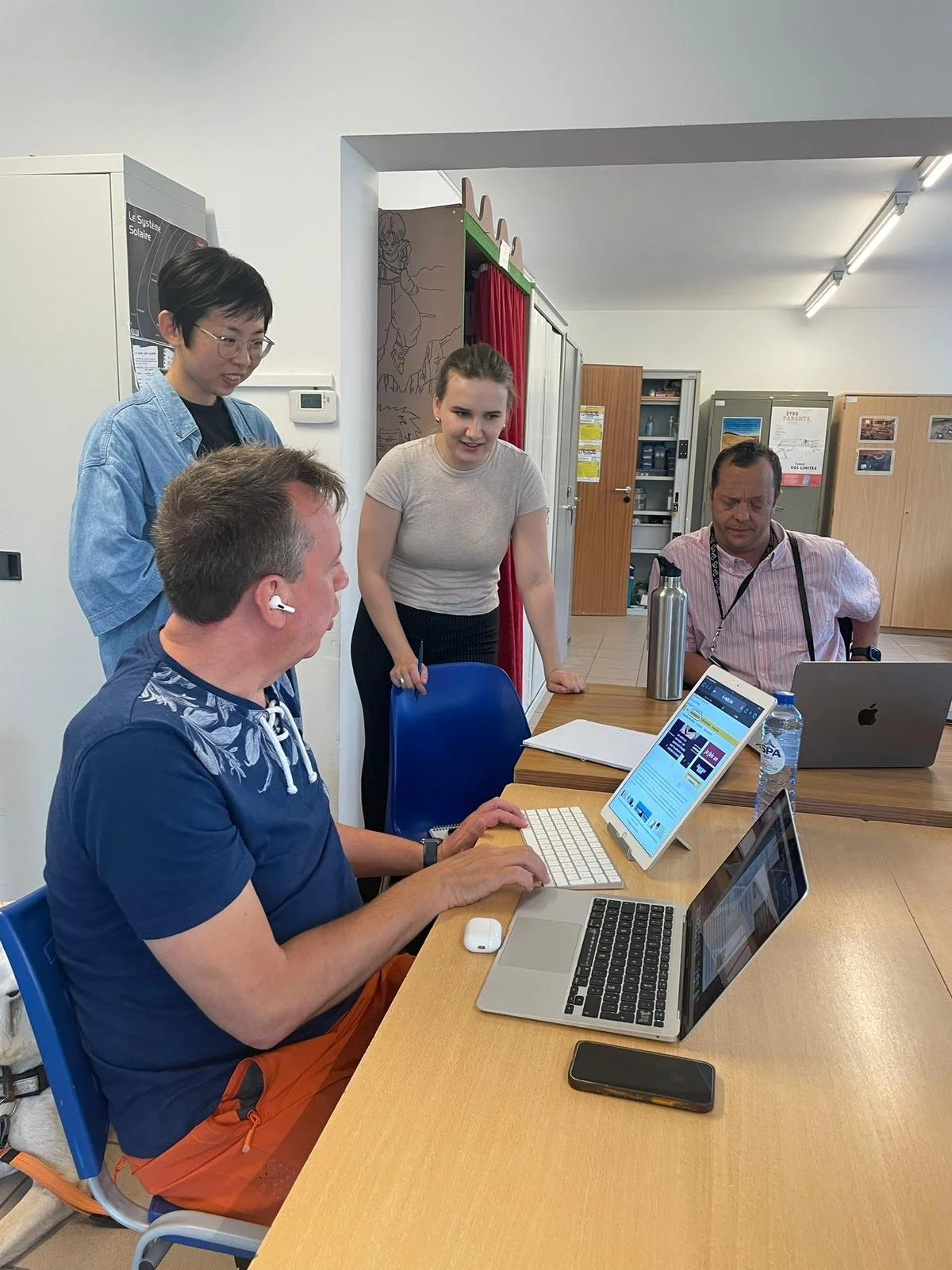
Facilitators opened with the prompt: "Can you share a story of a time in your life when you experienced disorientation, or when you were lost?" This encouraged discussion connecting virtual and physical navigation experiences.
Testing the updated prototype with "more audio landmarks and keyboard commands," the team discovered that "hearing multiple texts read at once...created too much auditory complexity and made it difficult to focus on the primary text being read."
Reflective Questions
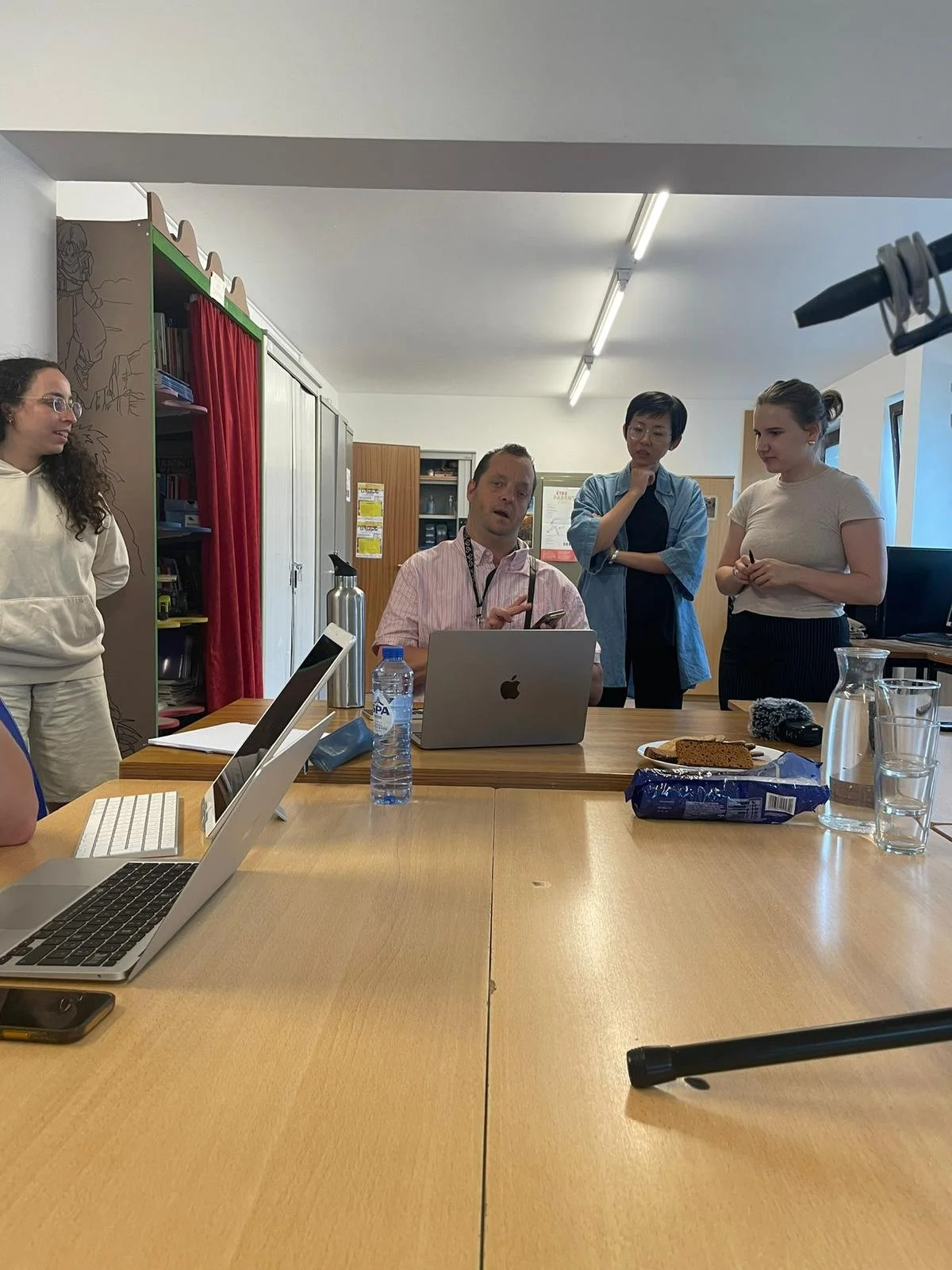
The team engaged with questions about "the extent to which we are prioritizing aesthetics over function" and how spatial information approaches could better serve people who are blind or visually impaired without simply reinventing existing screen reader navigation.